
Four millennia,
seven thousand metres,
one language.
Kyrgyzstan is 94% mountain — and one of the most thinly populated countries of the old world. To travel here is to enter a landscape where horse-riding nomads have spent their summers on the high pastures for four thousand years.
The Heavenly Mountains in full.
Over 90% mountains, two ranges, the world's second-largest mountain lake. Kyrgyzstan is a country that has to be read vertically.
Only a fraction of the country sits below 1,500 m. Settlements crowd into the valleys.
The highest peak, in the Tian Shan. The name means "Victory Peak" — once the Soviet Pik Pobedy.
The world's second-largest mountain lake, lightly saline, never freezes over. 180 km long, 60 km wide.

The northern of the two great ranges. Snow peaks, deep gorges, alpine meadows — and to the south the Pamir, even rougher and higher, with plateaus beyond the treeline.
Between the Tian Shan and the Pamir, thousands of waterways crisscross the country — with snow leopards, Marco Polo sheep and ibex inhabiting the remoter valleys.
The country's largest freshwater lake sits above 3,000 m. June to September it's open pasture; the rest of the year it lies under ice.


Ala-Kul, Tian Shan routes up to Khan Tengri, the walnut forest of Arslanbob.
Son-Kul loop, Jyrgalan valley — access to places no vehicle can reach.
Kel-Suu, Sary-Chelek, remote passes. Comfortable in distance, not in asphalt.
Ski tours at Ala-Archa and Karakol, and more recently at Chunkurchak.
Four times a year, a different country.
Strongly continental: hot summers in the valleys, harsh winters at altitude. The season doesn't just dictate the weather — it decides which routes are open at all.
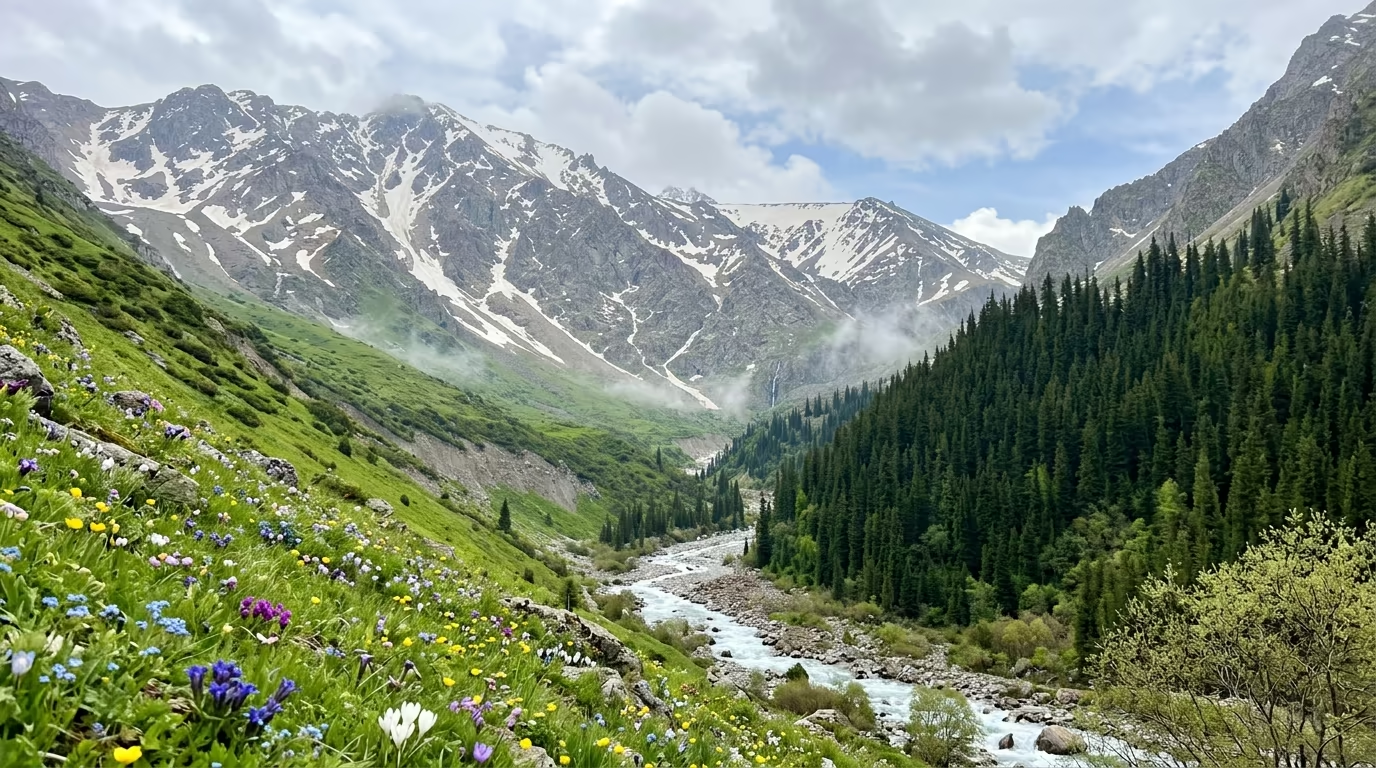
Valleys in bloom, passes still closed
The lowlands turn green; meadows and valleys open in vivid colour. Snow still lies in the mountains — high passes like Kalmak-Ashuu often only open in late May.
A good time for culture: Bishkek and the Chui valley, Burana Tower and the burgrave tombs. Not yet the time for Son-Kul or Kel-Suu.
The jailoo is open
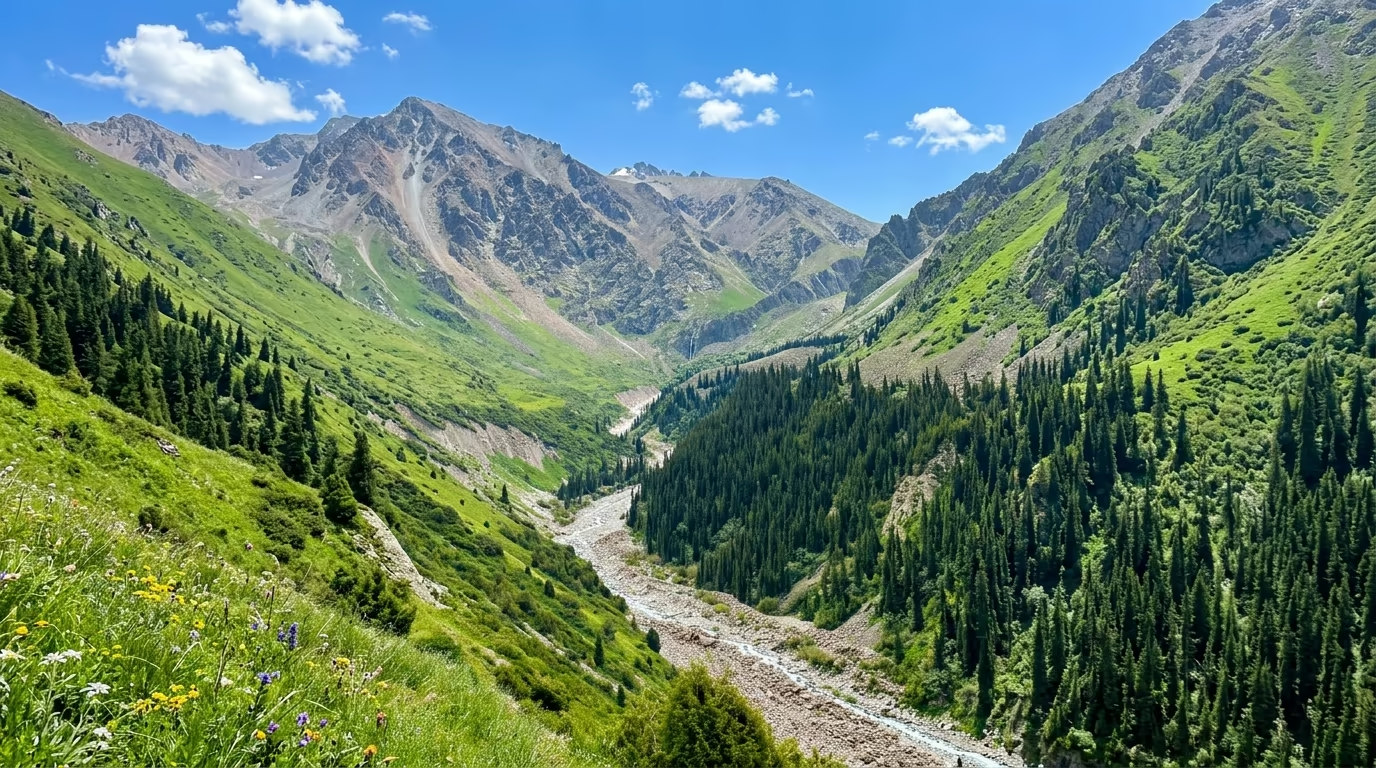
June through August is the real travel season. The high pastures are accessible, the nomadic families are up at Son-Kul and in the side valleys. Warm by day, cool by night — at 3,000 m even August can drop below freezing.
July and August can get hot in Bishkek and the Fergana valley; in the mountains temperatures stay mild.
A second season, different colours
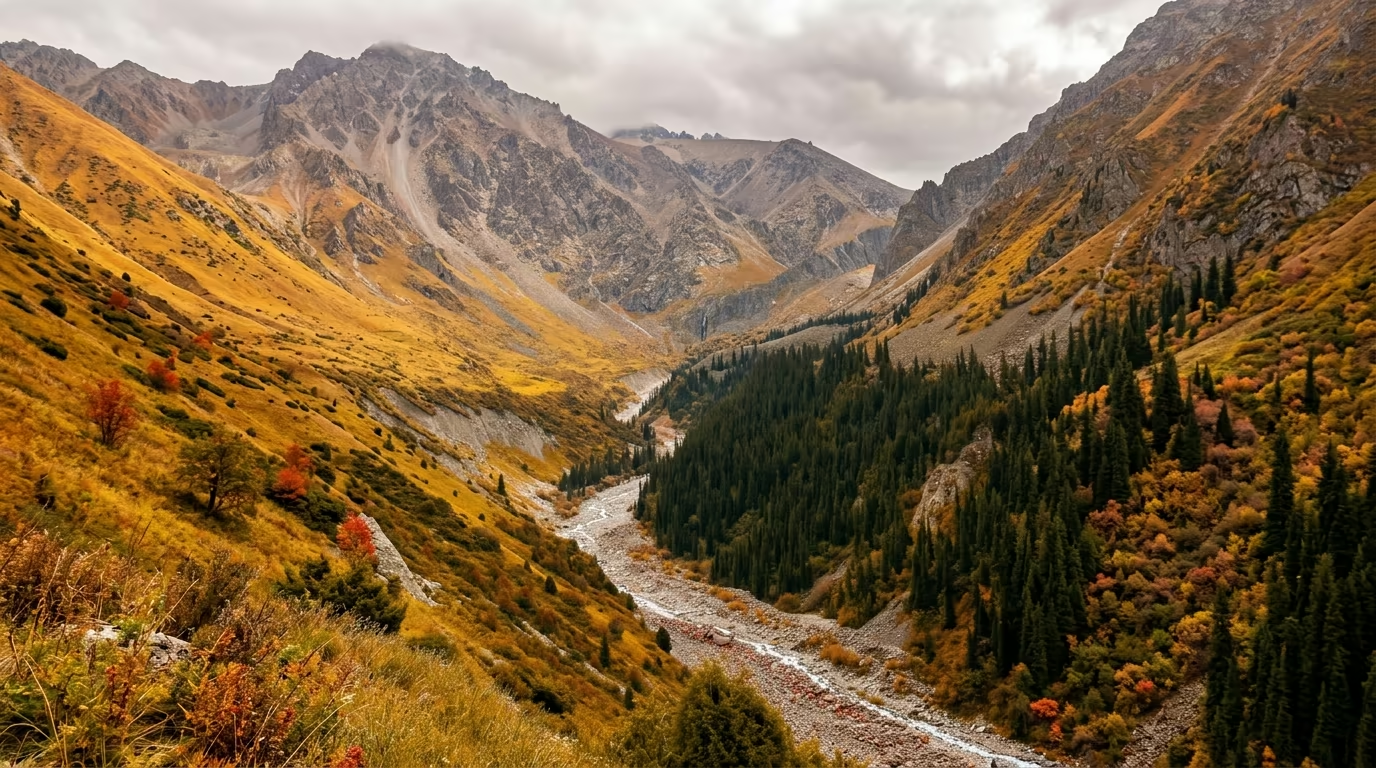
September and early October are mild, the air clear, the light golden. The Arslanbob forests turn colour, the harvest is in — a quiet, beautiful time when the jailoo are still occupied through mid-September.
From mid-October there's overnight frost up high and the first passes begin to close. One of the best times for culture and photography trips.
The country's white side
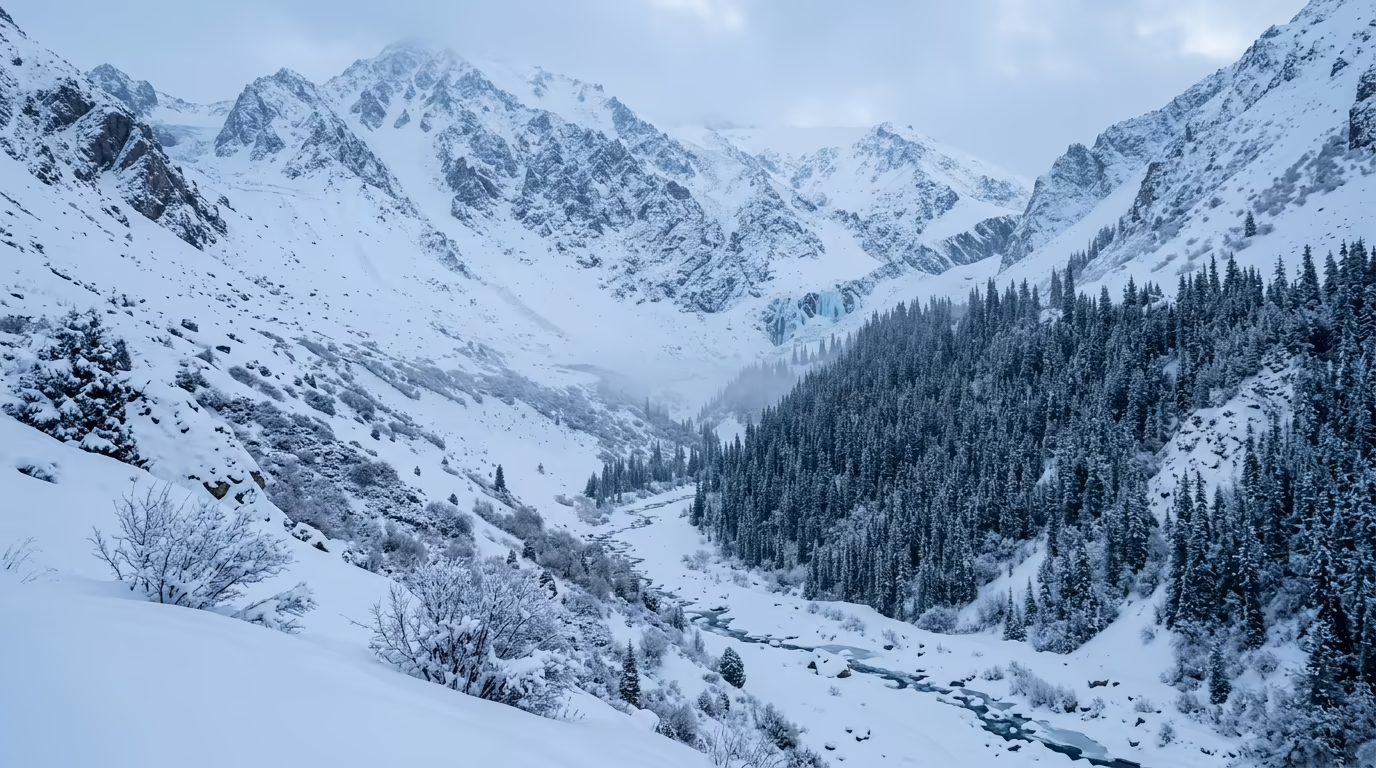
Rarely below −15 °C in Bishkek, frequently −30 °C in the mountains. Most jailoo and passes are closed, the yurts dismantled. In return, ski and ski-touring season: Ala-Archa, Karakol and a few freeride areas count as well-kept secrets.
Cities and Burana Tower stay reachable. Travelling Kyrgyzstan in winter means coming for snow and cultural proximity — not for the openness of the high plateaus.
From the Scythians to the republic — click to jump.
The Kyrgyz originate from the Yenisei region in Siberia and migrated to Central Asia in the 6th century. What followed is a chronicle of empires, the Silk Road, and sovereignty.
Scythians, Huns, and the Bronze Age
Archaeological finds attest to settlement as early as the Bronze Age, around 2000 BCE. Early nomadic tribes built a culture around livestock and horse breeding, leaving behind petroglyphs and kurgan burial mounds.
From the 1st millennium BCE they came increasingly under Scythian and later Hun influence. The Kyrgyz themselves are thought to originate from the Yenisei region in Siberia, migrating to Central Asia in the 6th century CE.
The route between China and the Mediterranean
In the Middle Ages Kyrgyzstan formed a central section of the Silk Road. The region fell under the Göktürks and the Uyghur Khaganate — trade, languages, and religions intersected in cities like Balasagun.
In the 9th century the Kyrgyz founded their own empire, the Yenisei Kyrgyz Khaganate. It didn't last long, but it left an oral identity that would later be preserved in the Manas epic.
Under Genghis Khan and his heirs
In the 13th century the region came under Mongol rule. The Mongols brought sweeping political and cultural change — they reorganised control of the trade routes and reshaped daily life for nomads and settlers alike.
From the 15th century the Kyrgyz tribes consolidated in today's region, often in loose confederations, which were only reorganised as a state in the 19th century.
Incorporation into the Tsarist empire, from the 1860s
From the 1860s onward Kyrgyzstan became part of the Russian Empire. Russian administration led to the settlement of many nomadic groups and introduced new administrative and infrastructural structures.
At the same time the influence of Russian settlers grew — with deep social fractures that led to the 1916 uprising and the flight of tens of thousands of Kyrgyz to China.
Industrialisation, collectivisation, Russification
The Kyrgyz Soviet Socialist Republic was founded in 1936. The Soviet era brought rapid industrialisation, collectivisation of livestock farming, and strong Russification — with marked social and cultural upheaval. Many Kyrgyz customs were pushed aside.
At the same time, infrastructure, an education system, and industry emerged — turning Bishkek (then Frunze) into a regional metropolis.
End of the Soviet Union, start of the republic
With the dissolution of the Soviet Union in 1991, Kyrgyzstan gained independence. The first years were marked by economic hardship, political unrest, and social challenges.
Even so, a cultural revival began: traditional music, crafts, the language, and the Manas epic took on new meaning as carriers of an identity of their own.
Democracy, tourism, and tradition
Two revolutions (2005 and 2010) have shaped the country. Kyrgyzstan today counts as the comparatively most open republic in Central Asia — with press freedom, regular elections, and a young civil society.
Ecotourism has been growing for a decade — host families, yurt camps, and horse tours have become the economic backbone of many mountain regions.
Salamatsyzby. Tap to translate.
Kyrgyz belongs to the Turkic language family, related to Kazakh and Uzbek. It has been written in Cyrillic since the Soviet era. Russian serves as the second official language — English is slowly catching up.
Manas — the world's longest epic
At nearly half a million lines, the Manas epic is about twenty times the length of the Iliad. It's traditionally recited from memory by Manaschi — living heritage inscribed by UNESCO on the list of intangible cultural heritage. Hearing a Manaschi recite for the first time, you understand why Kyrgyzstan never quite lost its language.
Everything you've read here
can be lived on the ground.
Tailor-made trips through the Tian Shan — nights in a yurt, horse trekking, Silk Road ruins, evenings with kymys and komuz music by the fire.